
FOUR GRANDFATHERS
- westmohney

- Aug 12, 2022
- 8 min read
Unfortunately ordinary people, almost by definition, leave behind only faint traces of their existence ~ Edmund Morgan
Grandpa John Cole of Boxford
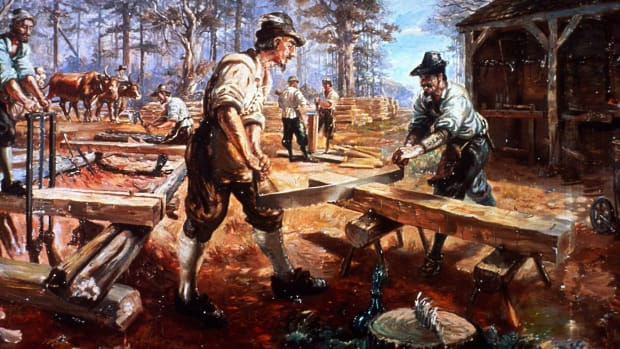
Our grandfather John Cole (7GGF) spent most of his young life in Lynn. His marriage to our grandmother, Mary Eaton (7GGM) of Reading, is recorded in Boxford in 1691 and that is where they spent the rest of their lives.
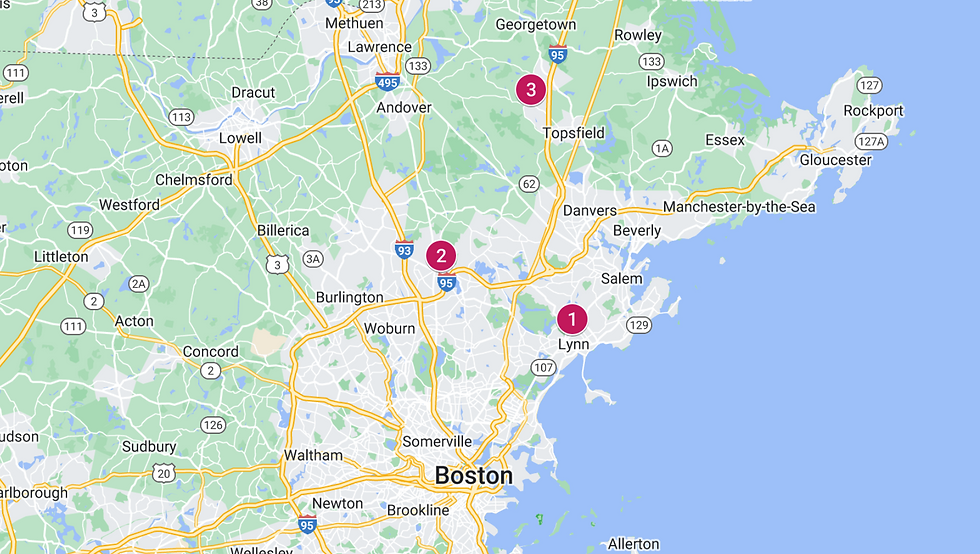
The couple made their escape from Lynn and Reading just in time. Only a year later, the witch furor that would upend the lives of John's father and uncle began. Both John Cole, Sr.'s (8GGF) wife, Sarah Aslett Cole and his brother Abraham Cole's (8U) wife, Sarah Davis Cole (9A), were accused of witchcraft and the two women spent many months in prison.
Grandpa John Cole, Jr. was a tailor and a surveyor of highways and that's about all we know of him. His death in 1737 was evidently not expected. He died intestate at age 68. Grandma Mary Eaton Cole said that he died "very suddenly" and, perhaps in mourning, refused administration of the estate. She left that duty to her oldest son Jonathan (7U).
Uncle Jonathan administered his father's estate and remained in Boxford for another eight years. Then, in 1745, he made a fateful move to Harvard where he bought a sixty-five acre farm. The very next year turned out to be a tragic one for the Cole family.
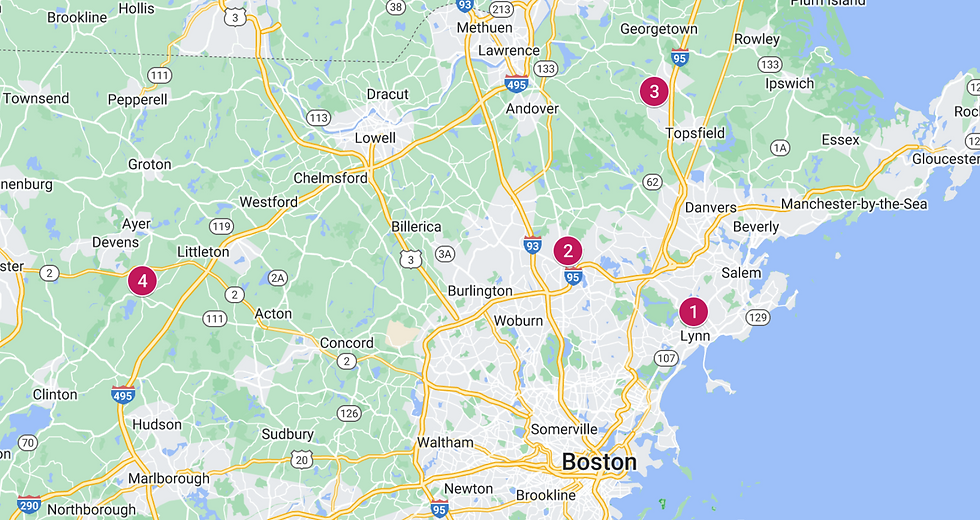
The first death that year was Jonathan's mother, our Grandma Mary. She died at her home in Boxford on 7 Oct 1746 at age 73. Mary's death was probably unrelated to the rash of deaths in the Cole family that began in Harvard only two weeks later.
The Dysentery epidemic that hit Harvard in 1646 has been researched by a project begun in 1998 to study "The Deadliest American Disasters and Large-Loss-of-Life Events." According to Ernest Caulfield:
The epidemic that began in Westborough about mid-August, 1746...was worse than that of the year before...twenty-five children died within two months, among them four from the Barns family. Days of ‘Solemn Humiliation Fasting & Prayer on acct of ye great Mortality. were observed in Westborough...Among the thirty-seven deaths in Harvard were five Willards, four Coles, four Sawyers, and three Warners. At the same time there were multiple deaths in many other Massachusetts towns, but the disease has not been identified though I suspect it was ‘Fever & Flux' (dysentery).
In a six day period, between October 17-23, three of the Cole children died of the "Fever & Flux." They were Martha (1C7X), 20, Jedediah (1C7X), 9, and Mary (1C7X), 3. Three days later, on October 26, Cousin Jonathan's wife, Judith, 46, succumbed as well. Five of their children, ages between five and sixteen, survived the epidemic.
Note: The dysentery epidemic began only five years after the Great Throat-ail (diptheria) scourge that swept through New England had ended.
Grandpa Ebenezer Sherwin of Dunstable
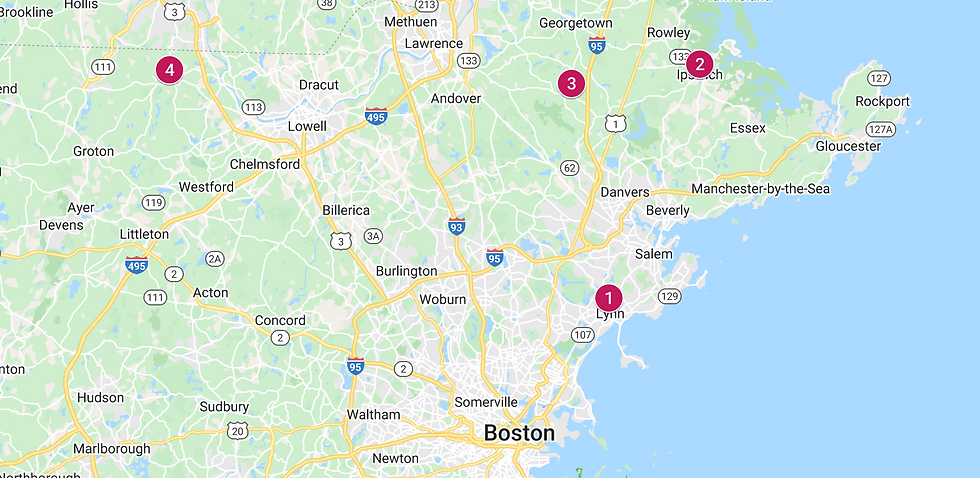
In 1726, Grandpa John Cole's (7GGF) daughter, Hepzibah (6GGM), married Ebenezer Sherwin, Jr. (6GGF). Ebinezer was the grandson of our immigrant ancestor John Sherwin (8GGF) who settled in Ipswich in the 1660's. Ebinezer lost his father, Ebinezer Sherwin, Sr., when he was only eight years old.
Ebenezer and Hepzibah were married in Boxford and nine of their children were born there. By 1747, the family had moved to the frontier town of Dunstable where the couple had two more children for a grand total of eleven. Though still a fringe town, Dunstable, in the middle of the century, wasn't suffering the kind of devastating raids that had plagued our Cummings and French families a generation before.
In 1753, Grandpa Ebenezer was chosen as part of a committee to oversee the building a new meeting house. We find a romantic retelling of the event in George Nason's History of Dunstable:
The raising of the edifice took place on the 18th of July, 1753, when we may suppose that the whole plantation was gathered together to assist in laying the ponderous sills, in erecting, with long split poles, the heavy posts of oak and in putting the rafters in place. We cannot but suppose that, in accordance with the custom of those days, they passed the bowl freely from lip to lip, and that they partook joyously of the bountiful dinner which our good great-grandmothers on such festivals provided.
The happy labor of the day, however, was lamentably cut short. While the men were working on the project, according to the Boston Weekly News Letter of July 26, 1753: "We hear from Dunstable that a sorrowful Accident happened...Two Men assisting in the work fell from a spar and one of them had his Brains dash'd out, his Head in the Fall striking upon a Rock, so that he expir'd immediately." The man who "had his Brains dash'd out" was our cousin Abiel Richardson (2C8X). Abiel, born in Billerica, had moved to the town of Pepperell, five miles from Dunstable.
In 1755, Grandpa Ebenezer was selected Culler of Staves for the town. Staves were wooden posts or planks used for building structures and also for making tubs and vats. Staves could even be used as payment for taxes. Because of the importance of staves in colonial life, the Culler of Staves was actually a pretty important position, because the staves "must all pass through the hands of the culler." There were strict rules pertaining to staves. In May of 1753, an ordinance was passed forbidding anyone from felling trees for staves unless they had explicit permission from the selectmen. With the ever-expanding population, protection of trees had become a priority.
Ebenezer was chosen as the first deacon of the Dunstable church in 1757. Each male church member built his own pew for his family. Those that paid the largest tax were entitled to first choice of where that pew should be. It appears that Grandpa Ebenezer Sherwin, even with his grand position as culler of staves, didn't have one of the choice spots in the Dunstable church, but two of our cousins did. John Cummings (1C9X), son of our Aunt Sarah Howlett Cummings (8A), had fourth pick. Ebenezer Proctor (1C8X), grandson of our immigrant ancestor Robert Proctor, (8GGF) had seventh pick.
Grandma Hepzibah had given birth to ten children over the course of twenty-five years. Her first was born when she was twenty-three, her last when she was forty-eight. She died in 1756 at 51 years of age. She left five underage children, the youngest only three. Grandpa Ebenezer died intestate seven years later in 1763. He left three underage children who were appointed older siblings as their guardians.
Grandpa Richard Hall, Jr. of Bradford
The marriage of Richard Hall (9GGF) of Bradford and Martha Benson (9GGF) of Hull had something of a rough beginning. When Martha found herself in the family way, the couple quickly wed but not quick enough to escape the watchful eyes of their Puritan neighbors. They were summarily called back to Hull, the scene of the crime, to face the music. Found guilty of fornication, Richard and Martha were given the choice of a fine or the whipping cart. Their choice doesn't seem to be recorded but we surely hope it was the first option.
After the rocky start, Grandpa Richard and Grandma Martha led exemplary lives in Bradford. Richard even became Deacon of the church. Over the course of sixteen years, the couple had seven children. One of these was our grandfather, Richard Hall, Jr. (8GGF)
Richard, Jr. was born in February of 1676 during the height of King Philip's War. Bradford, luckily, managed to stay relatively assault free for the entire course of the war. Richard was still a youngster during the bulk of King William's War in the 1690's so probably saw no action in that war either. In 1699, when he was 23, Richard married Abigail Dalton (8GGM), granddaughter of our immigrant ancestor Philemon Dalton (10GGF).
Abigail had been born in Hampton, New Hampshire. She was only eight years old when her father, Samuel Dalton (9GGF), died in Hampton. After her husband's death, Abigail's mother, Mehitable Palmer Dalton (9GGM), moved the family back to her hometown of Haverhill. When Mehitable married Reverend Zecheriah Symmes, the family moved once more, this time across the river to Bradford. Sixteen years later, Abigail Dalton married Richard Hall.

Richard and Abigail had six children over the next twelve years. Then, tragically, Abigail died. Since her death was never recorded in Bradford, we only know that she died sometime between the birth of her last child on 19 Jun 1712 and the publishing of Richard's intention to marry Mehitable Barker on 26 Apr 1715. Grandma Abigail would have been about 43 years of age when she died.
Grandpa Richard and Mehitable Barker probably married quite soon after their marriage intention was recorded because their first child was born exactly eight months later. They had five children together, all born in Bradford. Around 1725, Richard and Mehitable made a move to Billerica and sometime before 1743 they moved to Harvard, MA. All of their children were grown at the time and it seems the entire family managed to escape the 1746 dysentery epidemic in Harvard that afflicted our Cole family.
As was all too common, on 29 Sep 1760, Richard deeded his entire homestead to his son Ephraim (7U), one of his sons with his second wife Mehitable. There was no record of deeds or bequests to any of his other ten children, though six were sons.
The date of Richard's death, like his wife Abigail before him, was not recorded. He died sometime between the date that he deeded his property to son Ephraim (7U) in 1760 and June of 1761 when Ephraim sold the same property described as "that Richard Hall lately lived on." After the property was sold, we lose all trace of Uncle Ephraim. He probably took the money and ran.
In 1761 when he died, Grandpa Richard would have been 85 years old, twice the age of his first wife, poor Grandma Abigail, who died at such a young age.
Grandpa Abraham Stickney of Rowley and Tewksbury
Richard and Abigail Dalton Hall's second child was our grandmother Abigail Hall, Jr. (7GGM). Her father and stepmother's move to Billerica in 1725 turned out to be fortuitous for Abigail. There, she met and married Abraham Stickney (7GGF) in 1727.
Grandpa Abraham had been born in Rowley, the seventh in a family of eleven children. His father, Samuel Stickney (7GGF), died intestate in 1715 when Abraham was fifteen. The estate was divided among the family members with one third going to Samuel's wife, Grandma Mary Haseltine Stickney (7GGF). The rest was divided into shares between the eleven children with two shares going to the oldest son. Abraham's share was probably negligible, prompting his, also fortuitous, move to the greener pastures of Billerica.
Grandpa Abraham did his stint in the military, serving from July to November in 1722. Drummer's war was being fought at that time. Though that war was fought mostly in Maine, Abraham probably served for the defense of his home town of Billerica.
In 1727, Grandpa Abraham Stickney and Grandma Abigail Hall were married in Billerica. They made their home in that part of Billerica which was separated into the town of Tewksbury in 1737. Grandpa Abraham was a farmer and a deacon of the Congregationalist church in Tewksbury.

Note: Our Kittredge and Kidder families also lived in the section of Billerica that became Tewksbury.
Abraham and Abigail lived fairly uneventful lives, raising their seven children in Tewksbury. Abraham died in 1783 at age 82. Abigail outlived her husband by one year. She died in 1785 at age 83. The couple were blessed with fifty-six years of married life. They must have been doing something right.


Comments