
Revolutionary Stories Part IV
- westmohney

- Oct 5, 2023
- 14 min read
Updated: May 9, 2025
The future emerges from the past. ~ proverb from Senegal

Dr. Cornelius Baldwin
Cornelius Baldwin (5C6X) descended from the Connecticut branch of our Baldwin family. Our grandfather, John Baldwin (8GGF), settled in Billerica while his cousin, also John (1C10X), settled in Milford, CT. John's great-great grandson Cornelius was born in New Jersey in 1751 and studied to become a medical doctor. When the war began, he was appointed surgeon of the 2nd New Jersey Regiment. He was with General Washington during the Continental Army's harried retreat from New York.
While on a brief stop in Morristown, Cornelius wrote to Surgeon General John Warren about his dissatisfaction with the chaos of the retreat, particularly regarding the medical supplies. In the letter, it appears he threw everyone under the bus. The letter is dated 1 Dec 1776.
Sir -- Dr. Brown appears to me to have been guilty of a willful mistake in informing you that he had stopped the wagons in consequence of the information he got from the letter directed to you. The wagons have not been stopped. . .I can't learn that Carnes has done anything whatever. He seems entirely stupid and incapable of business. I have sent Mr. Shaw, with all possible speed, after the wagons. . .I shall proceed on immediatly to Bethlehem, and endeavor to procure the best quarters possible for the sick and stores; for I believe you have not much reason to expect anything from Dr. Shippen, or his surgeons.
Cornelius Baldwin, Jr. Cornelius was on his way to Bethlehem to establish a military hospital there. John W. Jordan, in his article "The Military Hospitals at Bethlehem and Lititz during the Revolution" wrote about Washington's need for a hospital for his wounded and sick soldiers:
Having crossed the North River into NJ, the commander-in-chief continued his retreat to Newark, New Brunswick, Princeton, and Trenton, closely followed by Cornwallis. It was at this crisis in the affairs of the army that the removal of its general hospital, in which over one thousand sick and wounded were lying, from Morristown to some points in the interior of Pennsylvania became an imperative necessity, and Bethlehem was one of those selected.
Note: Many of our early Mohney relatives made their homes in Bethlehem.

When the Americans arrived in Bethlehem, after an 80 mile retreat, the building chosen for the military hospital, Single Brethren House, was already being used as a hospital by people of the Moravian faith.
Note: The Moravian Church, which dates to 1457, is recognized as the "oldest active worldwide Protestant Christian denomination." We wrote about our cousin Loammi Baldwin's (3C7X) tour of the Moravian complex in our last post, "Crossing the Delaware."
Jordan wrote about Cornelius' arrival to establish the military hospital:
On December 3 1776, the brotherhood were excited by the arrival of Dr. Cornelius Baldwin, of the New Jersey Line, direct from the army, who rode up to the clergy house and delivered to the Rev. John Ettwein, to who he was directed, the following order:
To the Committee of the Town of Bethlehem or others to whom it may concern
Gentlemen — According to his Excellency General Washington’s Orders, the General Hospital of the Army is removed to Bethlehem, and you will do the greatest Act of humanity by immediately providing proper buildings for their reception. . .I doubt not, Gentlemen, but you will act upon this occasion as becomes men and Christian. Doctor Baldwin, the Gentlemen who waits upon you with this, is sent upon the Business of Providing proper Accommodations for the sick; begging therefore that you will afford him all possible assistance, I am Gentlemen
Your most obedient humble Servant, John Warren
Jordan also describes the arrival of the sick and wounded soldiers to the hospital in Bethlehem:
The ensuing two days are days of unrest for the peace-loving Morovians, for the sick. . . commenced to arrive in large numbers and in all manner of conveyances. Their sufferings from exposure to the weather and improper transportation made them pitiable objects to behold. . .
From 1775 until the end of the war in 1781 Bethlehem became a "thoroughfare" for the troops. In 1777, when the British occupied the American capitol in Philadelphia, all soldiers in Pennsylvania were transferred to the hospital in Bethlehem. It may have been about this time that Cousin Cornelius left Pennsylvania to join the 8th Virginia Regiment where he worked as a physician until he was captured by the British at Charlestown in 1780. After five months confinement, He was exchanged and promptly joined the 1st Virginia Regiment.
Cornelius evidently liked the South. He settled in Winchester, Va and began a new medical practice there.

In 1784, Cornelius married his first wife. Shortly after the marriage, he purchased a house that would be his home for the rest of his life. He evidently embraced the southern life style in more ways than one. The 1788, census show that he owned two slaves.
It appears that in 1803, Cornelius got the westward movement call that was so prevalent at that time. He asked Archibald Stuart, a prominent Virginia attorney and politician, to put in a good word for him. Below is the letter from Stuart to Thomas Jefferson written in December of 1803:
This will be handed to you by Doctr Cornelius Baldwin a young Gent. . .who has resided several years in this place and practised Physic with considerable reputation -- He is desirous of becomeing an adventurer in our newly acquired Terretory on the Mississippi and should any appointment in his line be in the Gift of the executive would gladly embrace such an opportunity of introducing him selfe to public Notice in that quarter -- Should he meet with such an appointment, I have no doubt but he will acquit himselfe to the entire satisfaction of All concerned. . .
Stuart also sent a letter to Senator John Breckinridge of Kentuky stating that Cornelius was planning to move to Noew Orleans to secure "a more profitable Station" and that he was hoping for a federal appointment "untill he could acquire some Knowledge of the people & be enabled to stand upon his own legs. Another friend, Jacob Kinney wrote to Brikinridge telling him that Cornelius had "mad an unfortunate investment in iron works."
It appears that nothing ever came of Cornelius' desire to move west and he remained in Winchester. His wife died in 1788. He would marry three more times before his death in 1826. He and his wives had five sons, four of whom became physicians. His other son became a justice of the Virginia Supreme Court.
Below are four pictures of Cornelius' home showing the changes from 1880 to the present day:


the house at 321 Princeton Rd, Sterling MA
In Revolutionary times, Princeton Road in the town of Sterling was the major road through Sterling and "part of what became the main stage, wagon, and postal route" that went west to Albany, NY.

In 1760, our cousin Phineas Heywood (1C8X) purchased 233 acres on that same Princeton Road in Sterling. It doesn't appear that Phineas ever lived on the property. In 1762, he deeded the property to his two sons, Seth (2C7X) and Timothy (2C7X), who both built homes on their respective properties. The brothers lived in Sterling until 1777 when, together, they sold all 233 acres to another cousin of ours, Benjamin Richardson (3C7X).
Benjamin was born in Leicester, MA in 1731. At age 14, he was apprenticed to a carpenter in Worcester but that trade didn't seem to suit him. When he was 21, he went back to his hometown of Leicester and "engaged in the business of making potash." Back then, potash was used for such things as making soap, tanning leather and, most importantly, for gunpowder. Benjamin also dabbled in the grocery business.
Benjamin first married in 1758 and, by 1760, had made enough money to purchase a farm. There, he lived quietly raising his seven children until war broke out. Forty-four at the time, Benjamin did his duty for his country. He marched on the Alarm of April 19 and did service in Boston after the British evacuation.
When his wife Eunice died in June of 1776, Benjamin left the military and returned to Leicester to take care of his children. Upon returning, however, Benjamin must have decided that, with the death of his wife, a change was in order. He sold his farm in Leicester and packed the kiddies off to Sterling. There, he bought the entire 233 acre farm of our cousins Seth and Timothy Heywood.

During the revolutionary years, a need for inns and taverns had become an increasing necessity. Stagecoaches had just entered the scene and the "extraordinary travel required by military men had made innholding a lucrative proposition."
Note: Most of the lowly military men who traveled by stagecoach to report for duty submitted petitions for reimbursement that were most often denied by the government.
After purchasing the Sterling property, Benjamin enlarged Seth Heywood's house and the newer section became a tavern which he opened in 1779. Benjamin "served travelers on the busy east-west stage and postal route through Sterling," and his place became known as "The Richardson Tavern."
The Richardson Tavern continued running strong after the war. Benjamin, like Cousin Cornelius Baldwin, would marry three more times and have six more children before his death in 1821 at age 89. The home that Seth Heywood built and Benjamin Richardson improved, shown below, is now listed on the National Register of Historic Places.

paying your way out
In 1777, our cousin John Kidder (2C7X) was forty-one years old. He must have been a man of some means because he was able to do what many other men were not: he bought his way out of military service. It's possible that John had pressing matters at home that caused him to dodge his way out of the draft in the months before the siege at Ticonderoga. While our journal writing cousin Jeduthan Baldwin (3C7X) was bridge building and shoring up fort defenses, John "paid for a man's service in the Ti. campaign."
The next year, when the Saratoga campaign was heating up, John paid another man to take his place and was further able to delay his service. By 1778, however, it appears that he was ready to fight. John was part of Captain William Lee's company in the Rhode Island expedition of 1778 and again at Portsmouth in 1779. By 1780, he was done. He paid yet another man to take over for his West Point service. Some would say that John Kidder was lucky to be a fairly wealthy man and that he had made quite good use of his money.
Cousin Reuben Cummings
Reuben Cummings (4C6X) was born in 1761 in Merrimack, New Hampshire. We wrote of Reuben's grandfather, Jonathan Cummings (2C8X), in our "Aunt Sarah's Kids" post. Jonathan ran a ferry across the Merrimack River for many years.

According to town records, Reuben had the dubious distinction of being the only Merrimack resident to die in the Revolutionary War. Reuben, a mere 14 when he enlisted, was among the first fifteen minutemen in the town. Two others in this group were our cousins Captain Samuel Ayers (3C8X) and his son Samuel Ayers, Jr. (4C7X).
Rueben, like many boys who enlisted in the army, was a drummer. He participated in the Lexington and Concord battles of April 19, 1775 and then served in Cambridge during the siege of Boston and Bunker Hill. By August, 1775, Reuben was part of a company of rangers formed to defend the frontier in Vermont. He was discharged from this duty in December, 1775.
In July of 1776, Reuben reenlisted and was part of our cousin Colonel Isaac Wyman's (4C7X) regiment which was sent to support Benedict Arnold in the defense of Lake Champlain. Now 15, Reuben was stationed at Ticonderoga to help with "building fortifications and foraging for food and supplies."
On September 13th, 1776, Lieutenant Robert Burton’s diary reads “13 Sept on this day, Reuben Cummings, drummer, died in the 16th year of his age.” Reuben was three months shy of his 16th birthday. He is buried somewhere in Vermont, but the exact location is not known. Rueben's cause of death is also unknown but, during the course of the war, more men died of Illness and exposure than from injuries in battle.
In 1999, the Merrimack Heritage Commission, dedicated a monument to Cousin Reuben. Merrimack's only casualty of the Revolutionary War:

Our cousin Enoch Crosby, the spy
In her article written about our cousin, noted Revolutionary War spy Enoch Crosby (4C9X), Grace M. Pierce of the Daughters of the American Revolution wrote that "[t]he man or woman who enters upon such a career must possess strength of character. . .bravery and courage. . .but must also have what is called 'nerve,' poise, self-possession. . .tact and discretion unequalled. For his is the most hazardous of all undertakings. Discovery means death, the penalty inflicted alike by all nations."
Cousin Enoch was born in Harwich, MA in 1750. His family relocated to Carmel New York when Enoch was still quite young. In 1771, when he was 21, Enoch moved to Danbury, CT.

Enoch enlisted for military service in May of 1775 but, eight months into his term, he became ill and returned home to Danbury. By August, he had recovered sufficiently to re-enlist for duty. Since his regiment was already on the move at the time, Enoch set out alone to join them. This solitary journey sealed his fate. According to Judith Brister in her article "Enoch Crosby, Revolutionary War Spy," it was in Westchester County, NY that Enoch "met a Tory whose name he learned was Bunker. It was through this encounter that Enoch stumbled into his espionage career."
Enoch and Bunker happened upon each other in an area known as "The Neutral Ground," a buffer region lying between the British and Continental lines. The "terrain was hilly and rugged, and was overrun with looting marauding gangs of Tory 'cowboys' and equally lawless 'skinners' who favored the Continentals." The British continually "scoured" the area for Americans still loyal to the king.
Most of what we know of Enoch's exploits come from his own words in a deposition taken in 1832 for his pension application. Below is a copy of the bottom portion of that deposition with his signature:

According to his deposition Enoch “fell in company with a stranger,” who mistook him for a Tory. Instinctively recognizing the opportunity, Enoch was “willing to encourage that misapprehension & turn it to the best advantage.” When Bunker took him to meet a group of Loyalists, Enoch fooled them sufficiently to be immediately welcomed into the fold. That night, after gathering information, he slipped away to White Plains, NY where he reported what he had learned about the British plans to the Committee of Safety there.
John Jay, the future Supreme Court Justice, was head of the Safety Committee at White Plains at the time. He was also the chair of a newly formed counterintelligence committee. Jay saw Enoch's chance encounter as a golden opportunity for further gathering of vital information for the war effort. He was able to persuade Cousin Enoch that, by continuing to pose as a Tory, his actions would be of immeasurable value to his country.
In his article "The Founding Fathers of American Intelligence," P.K. Rose names three men who, today, are known as the father's of American intelligence: George Washington, Benjamin Franklin and Cousin Enoch's mentor, John Jay. Three meeting rooms in the CIA's Liaison Conference Center are named after these men.
Cousin Enoch's stint as an American spy was relatively brief. He worked for Jay from August 1776 until the spring of 1777 with all of his forays in the Fishkill area of New York.
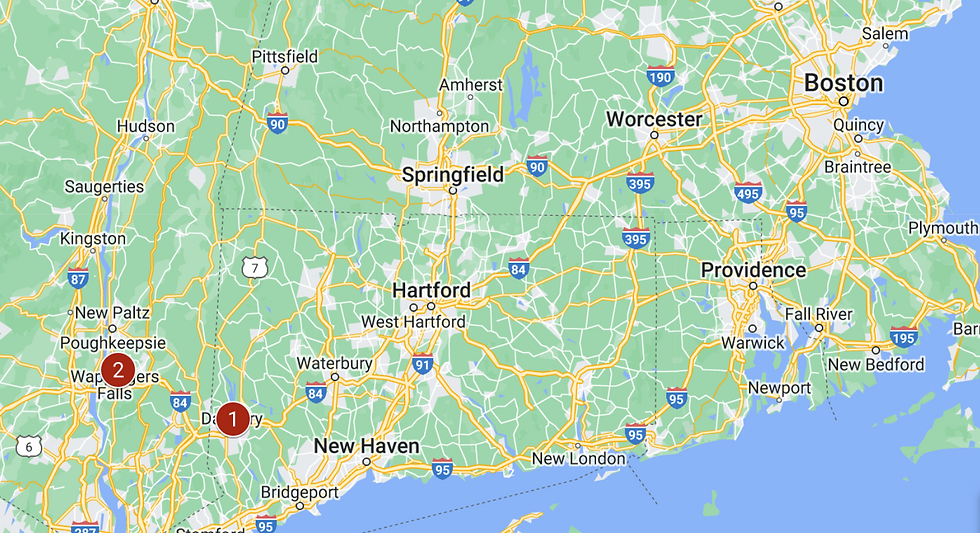
Enoch's missions involved infiltrating Tory organizations, then ratting the British sympathizers out to the authorities. Many of Enoch's briefings to Jay led to Tory arrests. In one of his first missions, using as his alias the ridiculously common name of John Smith, Enoch posed as a shoemaker. In the town of Marlborough, NY, he was "welcomed as a recruit in a military unit being formed among local Torys." In the course of his mission, Enoch sent the following message to John Jay:
I hasten this express to request you to order Captain Townsend’s company of Rangers to repair immediately to the barn, situated on the west side of Butter- Hill, and there to secrete themselves until we arrive, which will be tomorrow evening, probably about eleven o’clock; where, with about thirty Tories, they may find, Your obedient servant, John Smith
Agreeing to spy for your country is not for the faint of heart. A spy inevitably puts himself in danger of being exposed to the enemy, but there were other dangers as well. Enoch certainly risked execution by the Tories if they were to discover his true identity. The other side of the coin was the censure and hatred he faced from his American compatriots who witnessed him hobnobbing with known Tories. Enoch was so worried about his reputation that he asked Jay's Committee of Safety to make sure to clear his name in the event of his death.
Since his real identity had to remain absolutely secret, even to the Americans, there also remained the danger that Enoch would be arrested along with the Tories he had recently snitched on. Enoch actually allowed himself to be captured by American forces on more than one occasion. P.K. Rose gives an example of one of Enoch's arrests and subsequent escape:
This was an occasion when Enoch was arrested along with the Torys. When the Rangers showed up, Enoch tried hiding himself in a haystack, hoping he could later explain his "miraculous escape" to his British cohort. The Rangers probed the haystack with their bayonets and Enoch was forced to give himself up. Robert Townsend, captain of the Rangers, was unaware of Enoch's true loyalties. . .He took his captive to a secure room in Jay’s residence. Jay was not home, but his maid recognized Crosby and managed to give the guards at the residence some drugged brandy so that he could flee. The next day, his “escape” was made known to the other prisoners, and Crosby was off to join yet another Tory group.
Rose writes that Enoch "followed the same pattern of infiltration, capture, and escape at least four times. The intelligence he provided was used both to capture loyalists and undermine local support for the British, and on at least one occasion proved useful to the Commander of the Continental Army, George Washington."
Since the area in which Enoch was working was limited, he "became widely known in the region rather quickly. As a result, his value as a counter-intelligence agent diminished with each mission." By the spring of 1777, after about nine months of service, Enoch's spy days were over. He returned to regular army duty and there he served for the rest of the war.
After the war, Enoch and his brother Benjamin (4C9X) bought a 276 acre farm in Brewster, NY where they lived for the rest of their lives. Enoch died in 1835 at the age of 85. Shortly before his death, he wrote to a friend:
Having been spared to enjoy these blessings — independence and prosperity — for half a century and see them still continued, I can lay down my weary and worn out limbs in peace and happiness.

The house Enoch built in Brewster is still standing. It was on the market in 2017 for 1.75 million dollars.

Enoch Crosby in fiction and fact
According to P.K. Rose, "Enoch Crosby was perhaps the best known—and the most successful—of Jay’s agents. His reputation stemmed to a considerable degree from a widely held belief that he was the model for 'Harvey Birch,' the protagonist in James Fenimore Cooper’s novel, The Spy." While Cooper never revealed the inspiration for his character in The Spy, Cousin Enoch is still widely held as the front runner.

Enoch was also the protagonist in H.L. Barnum's 1826 publication of The Spy Unmasked: or the Memoirs of Enoch Crosby, alias Harvey Birch. According to Charles Dewey in his article "Enoch Crosby: A Hudson Valley Spy in Fact and Fiction," Barnum's account of our Cousin Enoch is "dramatized, exaggerated, and filled with an unrealistic dialogue." Dewey doesn't completely debunk the book, however. He maintains that "[o]ne can hardly blame the historian who uses the memoir as a source for research because it does contain modicums of truth and there are very few contradictory sources."

Dewey also maintains that "[f]or posterity’s sake, Crosby’s paper trail consists of more than just the memoir. It reveals a man who repeatedly risked his life for the United States, employed a unique skillset, and took some liberties to establish his reputation."
Finally, historian Willa Skinner weighs in. In answer to the question as to what made Enoch such a good spy, Willa says " “It must have been his personality. . .He pretended he was a humble shoemaker, and it allowed him to get in with all the locals, whether they were patriots or not.” While it's unknown how many Tories Enoch helped to capture, Skinner says “my answer would be, a lot. . . George Washington would say he was a hero.”
Below is a drawing of Enoch from the frontpiece of "The Spy Unmasked."



Comments