
Thomas Kemp and Wade's Inn on the Bay
- westmohney

- Jun 25
- 10 min read
No other Baltimore shipwright of the period matched his genius. He built the four most successful privateers of the War of 1812. ~ Cindy Vallar

Thomas Kemp Jr's. early life
Thomas Kemp, Jr. (3C5X), born in 1779, was the son of Thomas Kemp, Sr. (2C6X) and his wife Magdalena. We wrote about Thomas, Sr., who married outside the Quaker Church and was consequently left only a shilling from his father's will, in our last post.
Ca. 1803, at age 21, Thomas, Jr. left his home on the Eastern Shore to seek fame and fortune in the booming town of Baltimore, MD.

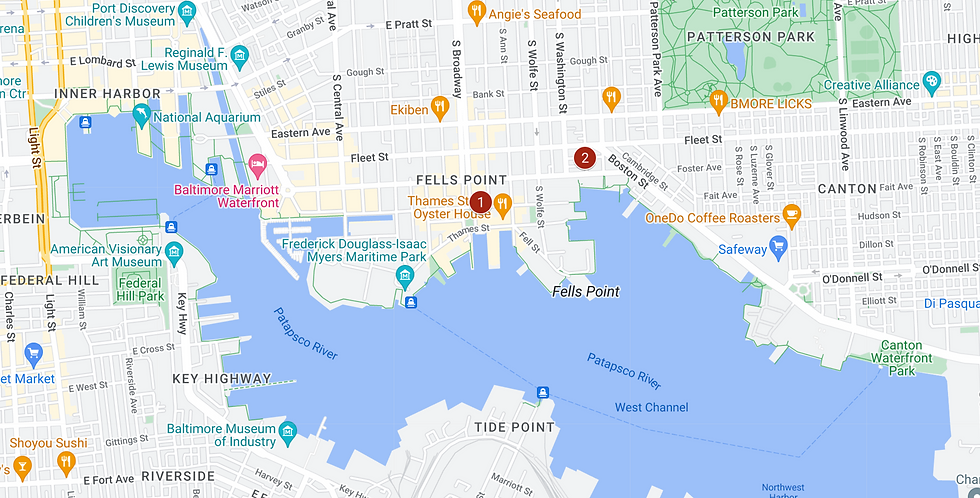
Soon after arriving in Baltimore, Thomas married Sophia Hortstman. At the time of their marriage, Thomas was 24 and Sophia only 15. Their first order of business was to purchase a piece of land at Fells Point from Sophia's father. The property, near the Patapsco River, was where Thomas built his home and later established his shipbuilding business a few blocks away.
Since the street on which Thomas' house was located is exceedingly narrow, the best picture I could find of his house is shown below. His is the shorter brick building on the far left. It's impossible to know if the homes were attached back in the early 1800s.

Over the course of six years, Thomas and Sophia had three children, Thomas III (4C4X), Elizabeth (4C4X) and Rebecca (4C4X). Only five weeks after the birth of Rebecca, Sophia died at age 21. Rebecca's name was then changed to Sophia to honor her mother. Eight months after Sophia's death, in November 1809, Thomas married Eliza Doyle.
Shipbuilding!
According to manuscripts written by Thomas, himself, he began his shipbuiding business shortly after arriving in Baltimore. One of his first projects was a schooner that he built with his brother Joseph (3C5X). In 1805, Thomas purchased property near his home where he established his own shipyard.
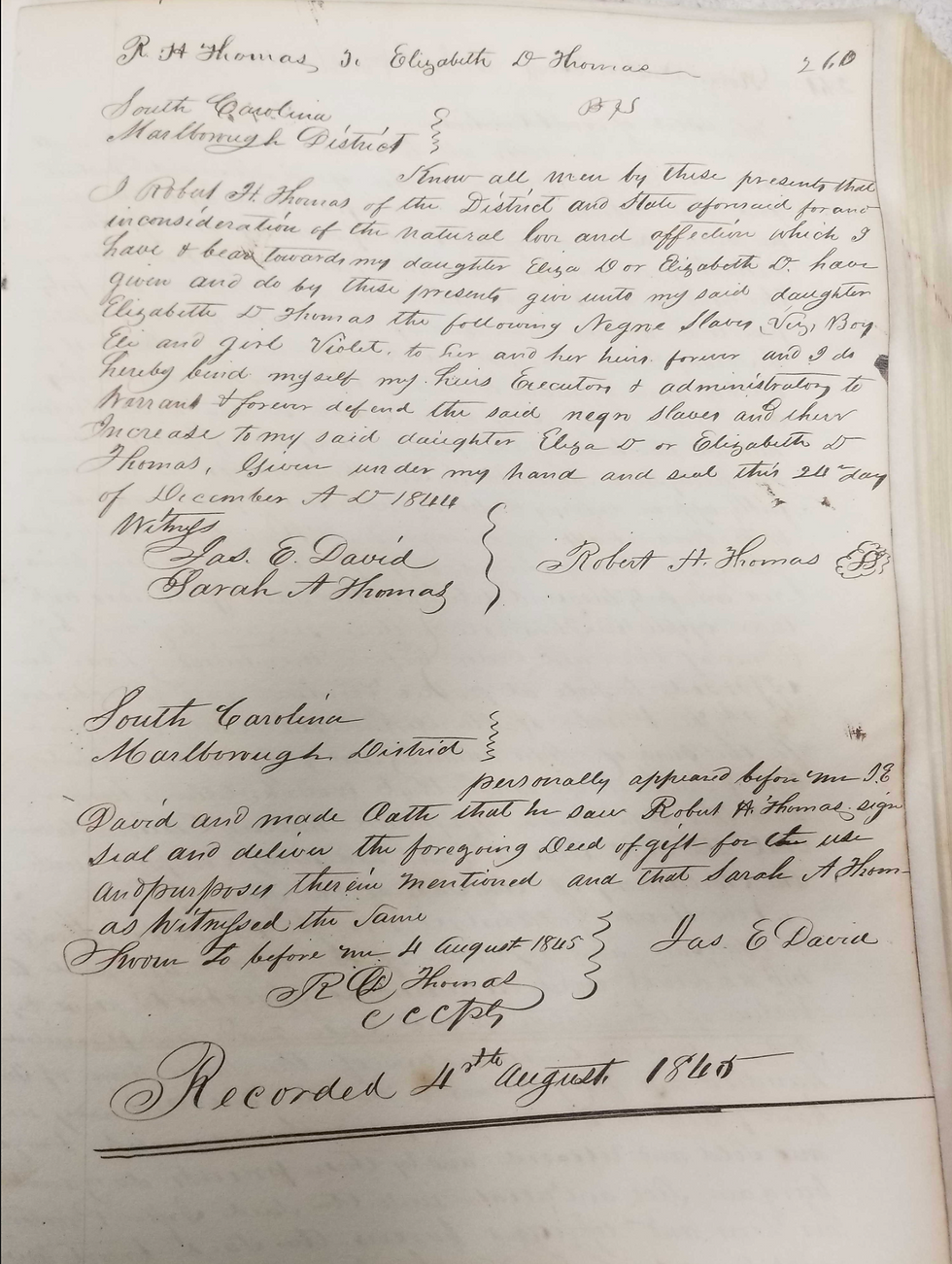
By 1806 Thomas had about two dozen men working for him. That same year, his father, Thomas Kemp, Sr. died. Thomas, Sr. left his property to his wife and two other children. Thomas, Jr., named executor, received only "the Negro boy James who is to be freed when he arrives at age 25." Thomas refused the executorship of his father's estate because of the distance between Baltimore and Talbot County.
During the War of 1812, Thomas was regarded by many as "the most skilled builder of privateer schooners." According to Cindy Vallar in her article "Fell's Point and the Baltimore Privateers," [n]o other Baltimore shipwright of the period matched his genius. He built the four most successful privateers of the War of 1812."
Thomas' business also "repaired, altered, and outfitted vessels." Two of his sloops of war, the Erie and the Ontario were built for the U. S. Navy. In her article "Thomas Kemp, Shipbuilder," M. Florence Bourne wrote that "One of the most exciting records found was his building of the famous privateer schooner Comet." On the Comet's third voyage out during the war, she captured a whopping 20 enemy vessels. Still, Bourne was particularly impressed with Thomas' schooner Chasseur which has been described as "perhaps the most beautiful vessel that ever floated on the ocean. . .a light and buoyant as a graceful swan."
The Chasseur, popularly nicknamed the "pride of Baltimore," was designed by Kemp himself and launched on December 12, 1812. Undoubtedly his masterpiece, she was one of the fastest sailing ships of all time and one of the most renowned privateers in history. Under the command of Captain William Wade she captured eleven enemy vessels, and under Thomas Boyle, her next commander, twenty-three. It was from this ship that Boyle proclaimed a blockade of Great Britain, sending a proclamation to that effect to Lloyd's (of London) Coffee House, where it was posted. Boyle and the Comet had been considered the epitome of privateering, but Boyle and the Chasseur were its apotheosis. One can imagine Kemp's pride when at the close of the war thousands of citizens turned out to cheer the Chasseur as Boyle brought her past Fort McHenry.
Below is part of Boyle's proclamation posted in Lloyd's of London:
I do therefore, by virtue of the power and authority in me vested (possessing sufficient force), declare all the ports, harbors, bays, creeks, rivers, inlets, outlets, islands, and seacoast of the United Kingdom of Great Britain and Ireland in a state of strict and rigorous blockade.
And I do further declare that I consider the force under my command adequate to maintain strictly, rigorously, and effectually the said blockade.
And I do hereby caution and forbid the ships and vessels of all and every nation in amity and peace with the United States from entering or attempting to enter, or from coming or attempting to come out of, any of the said ports, harbors, bays, creeks, rivers, inlets, outlets, islands, or seacoast under any pretense whatsoever. And that no person may plead ignorance of this, my proclamation, I have ordered the same to be made public in England.
Given under my hand on board the Chasseur.
THOMAS BOYLE

Below is a drawing of the Chasseur engaged in battle with the Schooner St. Lawrence off the coast of Havana in 1815.

a pending move
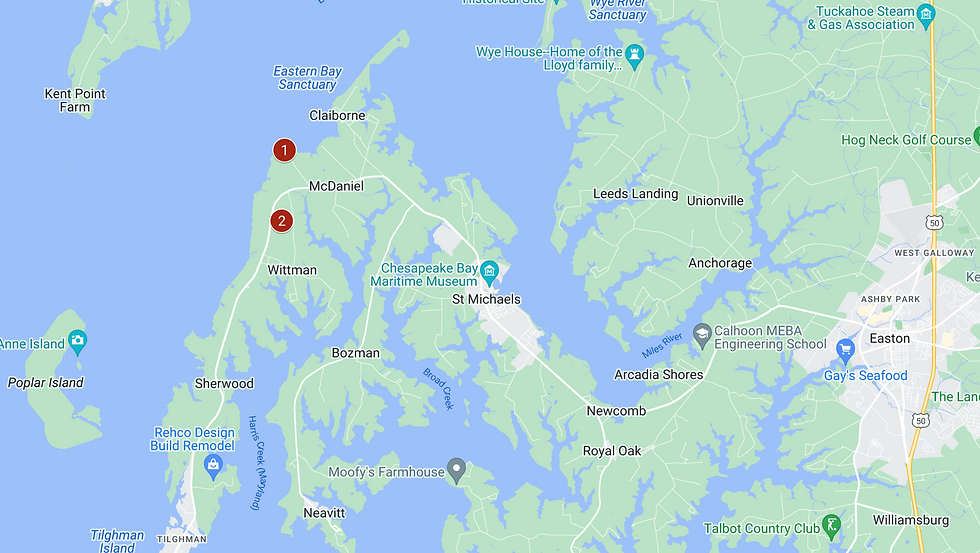
Although his shipbuilding career wasn't over, it appears that Thomas may have experienced a homesickness for his old stomping grounds on Maryland's Eastern Shore. In December of 1813, he purchased a piece of property at Wade's Point from Colonel Hugh Auld. The property was not far from the Kemp's ancestral home, Bolton, which was originally owned by Thomas' great-great grandfather Robert Kemp (7GGF). The purchase price for his new property was $7,000. Auld may have been anxious to sell the property after an invasion by the British four months earlier had caused damage to his house.
It would be a few years before Thomas finally moved his family back to the Eastern Shore. Meanwhile, he continued living in Baltimore and fulfilling government contracts through the course of the war. According to Bourne, he built three barges that the government was still paying for in 1815, long after they had been sunk by their captain to prevent their capture by the British.
In 1814, Thomas purchased an estate of 170 acres in Baltimore called "Lovely Green." By then he had his three children with Sophia and three more children with his second wife.
In the same journal with information on his ship business, Thomas also recorded "innumer-
able improvements" to his "Lovely Green" property.
work begins on the Wade's Point property
When the war ended, Thomas began work on his Eastern Shore property in earnest. He hired his sister Lydia's (3C5X) husband, John Bruff to oversee repairs to the damaged house and to build a barn. Thomas also sent a crew of his own workmen and, by November 1816, the Auld house was move-in ready. Captain James Martin was employed to move the family, along with their furnishing, in the sloop Seagull. The entire move took five weeks.
One of Thomas's first projects on the new property was to start a school for his and the neighborhood children. He paid instructor John Needles a salary and his $12.00 a month room and board to boot. Thomas also added 120 additional apple trees to the to the existing orchards of cherries, apples and pears with the help of "his colored man Jim, whom he paid fifty cents a day. . ." Jim may have been the inherited slave James that Thomas had been instructed to free at age 25.
Thomas' orchards were a source of income that, according to his records, he used to pay bills and wages on the farm. The fact that his farm also produced "flax, rye, wheat, corn, sheep's wool, feathers, flour, potatoes, and apple brandy and cider" indicated that his new property had become his main source of income. In one year the farm produced 5,500 gallons of cider. Thomas even bartered goods and manufactured bricks on the property.
Bourne wrote that:
As soon as there was "fine growing weather," the hands commenced brick-making. A brick shed was built, and "all hands helped to set the lime kiln," which was kept burning night and
day, the hands attending it and hauling firewood, until a total of 100,000 bricks were made.
Running the farm left Thomas little time to think about shipbuilding so he basically turned the business over to his brother Joseph. He then began divesting himself of his properties in Baltimore. On December 31, 1818, he wrote to his auctioneers:
Since I was in Baltimore I have determined to sell my house on Fountain Street Fells Point and now occupied by Mr. George Gardner shipwright at about 12 Dollars per month Rent. You will find by Referring to the Deed accompanying this letter that the lot fronts thirty two feet on two Streets that is fountain and Fleet Streets. . .It has erected on it a Very Comfortable and Roomy two story frame Dwelling house, a good brick Kitchen and Smoke house, A large work shop and very good counting house. It is my wish Gentlemen that you sell it—advertising it in the Patriot and Federal Gazette papers . . . and Oblige your Humble Servant Thos. Kemp
the house that would become an inn
After three years of living in the Auld house, Thomas began work on the mansion house that would eventually become Wade's Point Inn on the Bay. According to Bourne, "He determined to build another house, not only because of his growing family, but because the ever encroaching tides were sweeping away many acres of his property."
A few years before construction began on the new house, Thomas' productive kiln had been destroyed in a fire begun by "Daniel Haddaway's son shooting at rats." Since there could be no new bricks produced for the kitchen of the new home, Thomas got his laborers busy salvaging and cleaning bricks from the old house. We learn something about the care Thomas' took in building his new home from the history section of Wade's Point Inn on the Bay website:
Thomas Kemp’s talent as a shipwright, likely learned in St Michaels, more than prepared him for the task of designing and constructing his new home. His attention to detail is evident throughout the house and his artistic eye is reflected in his exquisitely scripted diaries, which recorded daily weather, events and the construction preparations and process. It is known from his diaries that he journeyed across the bay to study architecture in Annapolis.
Thomas Kemp was fascinated by the movement of the ships on the bay, no doubt at times watching for his most well-known construction known as The Pride of Baltimore, and he added a structure that has been dubbed the Lookout. Tucked away against the inside face of the interior end brick chimney is a hidden room with a window on the bay and another facing the road.
Thomas' death and the fate of the house
Very sadly, Thomas died at age 45 shortly after the new house was completed. He is buried in the family cemetery on the highest bluff of the property. The cemetery remains there today.
Thomas left the property he owned in Bay Hundred to his son Thomas, Jr. (4C4X) and the plantation at Wade's point to his son John (4C4X).
In 1841, John was still in the house with his family and he had added a new wing on the bay side of the house and other improvements to the property as noted by the Wade's Point Inn on the Bay website:
As the farm continued to prosper, he added in the Greek Revival style, a beautiful 2 story front porch and a portion of the back porch that we so enjoy today. The south room or parlor was remodeled in 1850. The entry door was framed with a bold Greek Revival surround topped by a stepped pediment. Unlike any other room in the house the parlor is fitted with 19th c Greek Revival woodwork.
In January of 1841, John wrote specifics about his family and property In his diary:
My family consists of myself, wife & daughter, brother William, and Mr. Adams, Teacher, whites;—and eight head of blacks—my stock consists of 6 head of Horses, 2 Mules, 15 head of Cattle, 30 head of Hogs, and 19 head of Sheep, of Poultry, 2 Peafowls, 5 Turkeys, 60 Chickens, 18 Geese, and 16 Ducks—Farming Implements of various numbers— Improvements, as it respects buildings, a two story brick dwelling house, a brick kitchen, a small frame office, a meat house, a turkey house, a hen house, a quarter, a carriage house, a tool house, a large corn house, and a very large barn and stables underneath, my farm is laid off in four fields of about 65,000 corn hills, and 3 lots of about 8,000 hills apiece, an orchard of about 250 trees—
On an undated page in his journal, John kept track of the birth dates of his slaves. In what seems to be a family tradition, John owned slaves but had a schedule for them to be freed. On the top of the page, he wrote, "Negroes ages, belonging to John W. Kemp to be free when they arrive at the age of 31 years: Below is a copy of the page with nine negroes listed:

John died in 1781 at age 69. Below is the obituary posted in the Talbot County newspaper:

After John's death in 1781, the house passed to his son Joseph (5C3X). Joseph and his wife "Miss Katie" made the house into a summer resort. From the Wade's Point Inn on the Bay website:
The arrival of the ferries and the mass movement across the bay brought a steady stream of family and friends from the western shore such that adding rooms and charging for their use was a necessary defense. But oh they had fun as numerous pictures and stories show.

Below is an undated picture of Joseph, the man on the far left with the hat, and his family:

After Joseph's death in 1923, Miss Katie continued running the farm and the bed and breakfast for another 20 years "with assistance from her many children."
With Miss Katie's death 1943, the Wade's Point property was left to all six of her children. Most of them had married and moved away but all except son John (6C2X) returned to help run the inn for the next 40 years.
Wade's Point Inn on the Bay
In 1984 the Kemp property was sold to its present owners, the Feilers. The Inn today boasts two lovely homes and a farmhouse, all with rooms available to rent.
The well cared for main house, below, was completed by Thomas Kemp in 1821 and has three rooms available to rent:

The summer wing, below, was added to the main house by Joseph and Miss Katie in 1890. It has eight rooms available to rent:

Sometime in the 1920s, Miss Katie and her children added a small farmhouse, below, to the property. Today it has four rooms available to rent:

Finally, in 1990, the Kemp Guest House, below, was built by the present owners to complement the existing home on the property. The Guest House has twelve rooms available to rent:

Below are the porch and two photos of the interior of the main house:




Comments