
Loammi's Sons
- westmohney

- Jan 29, 2025
- 12 min read
Cyrus was for many years the respected agent of the Middlesex Canal Co. . . ~ William Richard Cutter

Many of our past posts have featured our cousin Loammi Baldwin (3C7X) who had an eventful career as a colonel in the American army and later as a civil engineer. Loammi was married twice and had six children, five sons and a daughter. The little girl, Mary (4C6X) died of scarlet fever in May of 1776. She was only a year old and her father was away in the war at the time.
This post focuses on Loammi's five sons, all of whom followed in their father's footsteps and became civil engineers.
Cyrus
Loammi named his first son after his own brother Cyrus (3C7X). We wrote about the older Cyrus in our "Cyrus Baldwin's Tea Woes" post.
Loammi's son Cyrus (4C6X) was born in Woburn in 1773. His mother was Loammi's first wife, our cousin Mary Fowle (3C7X). Like two of his brothers, Cyrus began his engineering career working for his father on the MIddlesex Canal beginning with the survey work in 1792. He was 19 years old at the time.
Details on Cyrus' wife and children are sketchy but it appears that he married Elizabeth Varnum ca. 1799. I've seen reports of one to three children, two of them born over ten years after the marrige. All of the children are reported to have died at a young age, one by drowning at age three.
After the canal was completed in 1803, Cyrus was "for many years the respected agent of the Middlesex Canal Co., residing at the head of the canal in Chelmsford." He also served as the inspector and sealer of gunpowder in Lowell, only 3 miles from Chelmsford.

In 1818, Cyrus and his brother Benjamin (4C6X) surveyed the Merrimack River "for the purpose of making navigational improvements." After that, we don't hear anything about Cyrus' life until his death 16 years later.
Cyrus died intestate in 1834. His wife Elizabeth declined administration of the estate. The papers "specify" that there were no children. Administration of the estate was assigned to Cyrus' brother James (4C6X) who lived in Boston. The inventory of Cyrus' holdings included nearly 250 acres of land. The entire estate was valued at over $16,000 with shares held in several companies worth about $1,600. Also included were luxury items that indicated the Cyrus was a man of some means: an organ, a harpsicord, silverware, mahogany furniture, a chandelier, carpets and rugs. The inventory also mentioned the date of Cyrus' death and his age: 23 Jun 1834 at age 61 years 21 days.
Benjamin Franklin
Benjamin Franklin Baldwin (4C6X) was the second son of Loammi andhis first wife Mary. He was born in Woburn in 1777. In the 1790s, Benjamin worked alongside his father and two of his brothers on the Middlesex Canal Project. In 1800, he joined the Massachusetts militia and served for 16 years, first as captain, then as major and finally as a lieutenant colonel.
Ca. 1808, Benjamin married Mary Coolidge and the couple had five children. Engineering continued to be an interest and, in 1818, Benjamin helped his brother Loammi, Jr. with the Boston Milldam project.
In October of 1821, at age 44, Benjamin "died suddenly. . . as he was on his return to Woburn from a cattle show in Brighton."
After his death, Benjamin's widow married our cousin Wyman Richardson (5C6X), a lawyer, who had graduated from Harvard in 1804.
Loammi Baldwin, Jr.
Loammi Baldwin, Jr. was born in 1780 in Woburn. He would eventually follow in his father's footsteps to pursue a career in engineering. Over the years, however, Loammi, Jr. surpassed his father's accomplishments and he became known as the "Father of Civil Engineering in America," a title he still holds today.
Loammi, Jr., like his two older brothers, worked on the Middlesex Canal with his father. In 1794, when he was only 14, he went on a nine day inspection tour of the canal site with Loammi, Sr. and famed canal engineer William Weston. He worked on his father's canal for a total of five years.
In 1800, when he was 20, Loammi graduated from Harvard College. He demonstrated his interest in mechanical studies during his college years when he devised "a clock which kept good time." Loammi's studies at Harvard had been in law and, after graduation, he moved to Groton, MA where he interned at a law firm there. His interest in all things mechanical, however, didn't end with his new career.
While in Groton, Loammi designed and built a badly needed fire engine for the city that they named "Torrent." In 1804, he left the Groton firm and opened his own law office in Cambridge, MA. Throughout his shortlived law career, however, Loammi's first love continued to becken. In 1807, after spending seven years dabbling in law, the local government in Boston funded a trip for Loammi to England "during which he explored large-scale engineering projects."
In 1810, Loammi was elected a Fellow of the American Academy of Arts and Sciences in which his father had been one of the original members. In 1814 he was accepted as a member of the American Antiquarian Society.
Loammi's career in engineering has been described by the American Park Service:
Loammi Baldwin Jr.'s extraordinary abilities as an expert civil engineer brought him governmental and corporate projects up and down the East Coast. . .With explorations of England's public works financed by the City of Boston under his belt, in 1807 he opened an engineering office in Charlestown. There, as chief engineer working for the military and with the rank of Colonel, he focused on projects for the US Navy. . . tightening up coastal defense as they prepared for a pending war.
In 1814, with the War of 1812 still raging, Loammi served as chief engineer on the construction of Fort Strong in the Boston Harbor. For his service he was given the rank of colonel which, on occasion, confused him with his deceased father, Loammi, Sr., who had also reached the same rank.
After the war, Loammi married Anna Williams. It appears that they had only one child, Samuel (5C5X) born in 1817. Sadly, Samuel died when he was only five years old.
By 1819, Loammi was known around the country for his engineering feats. In 1819, he was asked to complete the construction of a milldam in Boston which he worked on with his brother Benjamin. From 1817 to 1820, Loammi was in Viginia and, in 1824, he went back to Europe where he spent a year, mainly in France, examining public works. When he returned to the United States, Loammi was part of a small committee that planned the Bunker Hill Monument. Almost immediately, he "recommended an obelisk form, and then supported the concrete design submitted by architect Solomon Willard."

According to Wikipedia, there were many other projects that followed:
In 1827 he accepted an appointment from the United States government which led to the two great works of his life (1827-1834): the naval dry docks at the Boston Navy Yard in Charlestown and at the Norfolk Naval Shipyard in Portsmouth. Closer to home, Baldwin designed the still-in-use granite Dry Dock No. 1 in the Charlestown Navy Yard, completed in 1833.
For the Charlestown Dry Docks,
Baldwin engineered an intricate complex of masonry, engines, pumps, reservoir, tunnels, culverts, valves, and gates in effect a huge well-coordinated machine. The Charlestown and the Norfolk Dry Docks were the first such naval structures in the United States
Loammi's engineering feats didn't stop there:
Baldwin led many other projects such as a marine railway at Pensacola; construction of buildings at Harvard College; a canal around the Ohio River falls; a stone bridge called the Warren Bridge at Charlestown; and the Union Canal in Pennsylvania. Chief among his noteworthy projects was the 79-mile Union Canal from Reading to Middletown, Pennsylvania that called for a 739-foot tunnel, three large dams and an 800-acre artificial lake. Against Baldwin’s advice, the president of the canal company ordered the canal narrowed to save money. Baldwin resigned in protest but had the last laugh when barges would not fit through the narrowed canal. It had to be widened, at great expense, to the dimensions called for in Baldwin’s original design.
In addition to his engineering projects, Loammi did a bit of surveying. In 1835, he surveyed the Richardson Farm, a property that had belong to our cousin Abel Richardson (4C7X). We wrote about Abel and his wife Mary in our "Another Hodgepodge" post.
Below is Loammi's drawing of the farm's layout:

About a year before he died, Loammi "had a stroke of paralysis." His second stroke "proved fatal." He died in Charlestown on 30 Jun1838 at the age of 58.
Loammi was buried in his hometown of Woburn. His brother James (4C6X), who had worked with him on many of his projects, continued his work.
For Loammi's contributions to their town, and so many others, the town of Charlestown created a memorial plaque in his honor which they placed in City Square.

James Fowle Baldwin
James Baldwin (4C6X) was born in Woburn in 1782, the son of Loammi, Sr. and his first wife Mary. He, like his brothers, had a stint at helping his father on the Middlesex Canal project. And he, like his brother, Loammi, Jr., initially persued a profession other than engineering. By 1803 he was in Boston establishing himself in the mercantile business. He married fifteen years later, in 1818, and had three sons. Sadly, none of James' children lived to adulthood. His second son died in 1830 when he was 8 years old. The other two died of typhus fever in 1834 at 13 and 6 respectively.
It might have been his brother Loammi, Jr. who renewed James' interest in engineering. In 1727, he joined Loammi in the construction of the Boston Navy Yard dry clock in Charlestown. In 1828, James began a two year surveying project, with two other men, for a railroad which would run from Boston to Albany, NY. Construction on the railroad wouldn't begin for another ten years but it was finally completed in 1841. James "always looked upon this, next to the introduction of pure water into Boston, as the most important of his professional works."
In 1825, the purity of the water in Boston came into question. James was appointed part of a commission charged with investigating sources of safe water for the city. From Wikipedia:
He dissented from the majority in the recommendation of Spot and Mystic ponds, and recommended Long Pond (Lake Cochituate). Others high in authority differed from his conclusion, but still he was immovable in adherence to his recommendation, in spite of rejection by popular vote. . . it was not renewed till 1844, when he was again in a position of influence on the commission. His plan was, however, adopted March 30, 1846; the plan was presented and read before that society, and soon after published in its Transactions. The ground was broken five months after, and on October 25. 1848, he had the pleasure of seeing his plan, so long resisted, finally triumphant, and the public fountain playing for the first time in the presence of a large concourse of people.
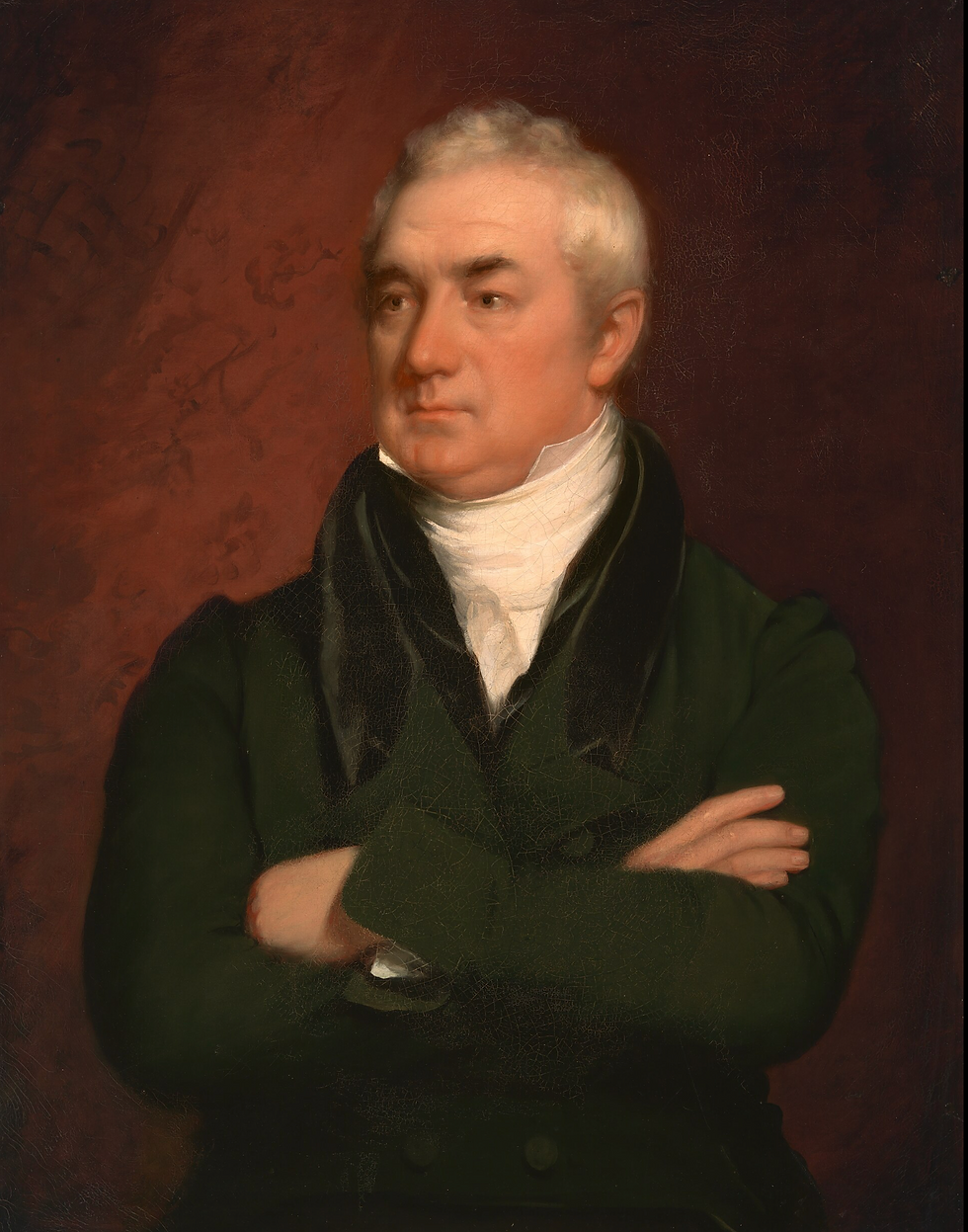
Below is a picture of James as a young man:

In 1832, James surveyed the location for the Boston and Lowell Railroad. That project he saw to completion, superintending the construction of the railroad. He later worked as an engineer for both the Ware Manufacturing Company and the Thames Company of Norwich.
In 1841, James was elected a Fellow of the American Academy of Arts and Sciences. He was also, for several years a, senator from Suffolk County in the Massachusetts general court. When the Boston Society of Civil Engineers was founded in 1848, James was chosen as their first president.
Note: The Boston Society of Civil Engineers is the oldest engineering association in the United States.
James died in 1862 at age 80. The Boston Daily Advertiser ran this obituary notice:
He was of a kindly and benevolent disposition, affable in his manners, warm and unfaltering in his attachment to his friends. His sense of justice and his fair appreciation of the rights of others showed to great advantage in many of his public works.
From A memoir of Hon. James Fowle Baldwin by Dr. Usher Parsons which was published in 1865:
He was a gentleman of highly respectable attainments, and surpassed by none as a scientific and practical engineer. He was employed by the State to superintend the construction of its gigantic public works. He was a prominent member of the American Academy of Arts and Sciences, and during many years held the position in that learned society in the section of Technology and Civil Engineering.


George Rumford Baldwin
George Baldwin (4C6X) was born in 1798, the only child of Loammi and his second wife, our cousin Margery Fowle (5C6X). In a letter following his last son's birth, Loammi wrote to his friend Benjamin Thompson (3C7X), aka Count Rumford, "I have had a son born to me to whom I have given your name."
Although Loammi wanted his son to attend Harvard, George was more of a self-taught scholar. Like his brothers, he was interested in math and science as well as surveying and engineering. He also got practical experience on excursions with his father and brothers. When he was 14, George sketched the fortifications in the Boston Harbor built by his brother Loammi, Jr. during the War of 1812.
George was quite busy with projects in the years between becoming an adult and his marriage in 1837. Some of those projects include a building bridge over the Mystic River in Medford, working with his brother Loammi, Jr. on the Union Canal in Pennsylvania and surveying the Navy Yard in Charleston. George was also well known for his railway work. He oversaw work on the Marine Railway in Boston and worked with his brother James on the Boston to Lowell Railway, the first major railway in Massachusetts and one of the first in the nation. Just before his marriage, George was in Nova Scotia and shortly afterwards he was working on the Brunswick Canal in Georgia.
In 1737, George married one of his brother Loammi, Jr.'s stepdaughters. Nine years earlier, Loammi had married the widow Catherine Wilder Beckford (4C6X). Catherine was the daughter of our cousin Catherine Richardson Wilder (3C7X). George married one of Catherine's daughters from her first marriage, Catherine Richardson Beckford (5C5X). Catherine was 15 years younger than George.
After the death of Catherine's, Sr.'s husband, the Beckford estate, "a spacious house with garden and open grounds. . ." became home first to Loammi, Jr. and then to George. The home was in Charlestown, MA and Loammi, Jr. relocated there following his marriage. When Loammi died in 1742, George then moved with his wife Catherine from Boston to Charleston to live in the "spacious" Beckford house.
George and Catherine had one daughter born to them in 1840, Catherine Rumford Baldwin (5C5X) but George kept quite busy after his marriage and the birth of his daughter. In 1845 he was chief engineer and surveyor on the Buffalo and Mississippi Railroad. He also conducted examinations of water power in Augusta, Georgia, in Washington and in Brooklyn, NY. It was in 1747, however that a lifechanging event took place. He was asked by the Mayor of Quebec City to work on a project to bring water into the city from the Native American village of Lorette. That project took more than ten years and would eventually result in a permanent move to Canada.
While the work in Canada went on, George also took on a project in Boston with his brother James. The project involved damming the Sudbury River to form Lake Cochituate which served as a water source in Boston for many years. While working on the project, he "had in charge" Sarah Thompson (4C6X), the countess Rumford. Sarah was the daughter of Benjamin Thompson (3C7X), aka Count Rumford.
In the early 1850s, George spent some time working in Europe. He returned to work in Boston for a time but, in 1856, he resigned as a chief engineer there and made the move to Canada.
Most of what we know about George comes from a tribute written after his death for the American Academy of Arts and Sciences. The President of the council read the tribute at one of the Proceedings. Below is a portion of that tribute:
I have in my hands the series of his (George's) diaries for more than fifty years, with the daily en'tries upon them of his employments and occupations. They contain. . .notes of a life of marvellous industry, of wide travel and of useful service. . .We find him called upon in all directions, on a large variety of occasions, as expert, witness, referee, or examiner of wharves and docks, in making surveys, drawing maps and plans, exploring state and city archives, tracing estates, estimating damages, assessing Costs, consulting lawyers, instructing legislative committees, and alone or with associates disposing of a vast number of trivial or serious interests at a period when the development of our railroad and manufacturing enterprises made a demand for talent and skill not then easily obtained.
He was instrumental informing the first associated company of engineers. It should be noted
here, that the varied and constant demand for his presence and services, especially when called upon for any utterance in public before many persons, was a serious strain upon one of his peculiar temperament. He was naturally shy, modest, diffident, and reticent, of most retiring and undemonstrative ways. His social intercourse was very limited, but his domestic ties and habits drew out from him very engaging and tender qualities. Under no stress of circumstances could he have made in public a speech of advocacy or argument. His delicacy and refinement made him personally attractive to his intimates
His journals show how fully every interval between these public works, and every moment of leisure, was employed in a vast variety of occasions in which he was called upon as an expert. But he always found time to indulge himself as an amateur in many congenial pursuits. He was skilled in all farming, horticultural, and agricultural labors. He had his work-bench, with the best of tools and scientific instruments. His pen was ever busy in his own affairs, or for the service of friends. It may be that his voluminous and carefully arranged and filed papers may yet need to be consulted for the facts and information contained in them.
It was on an autumn visit to the family mansion at Woburn that his life of ninety years closed
where it began.

Such was George's fame that his death was noted in many newspapers around the country. Below is an obituary from the Boston Globe:

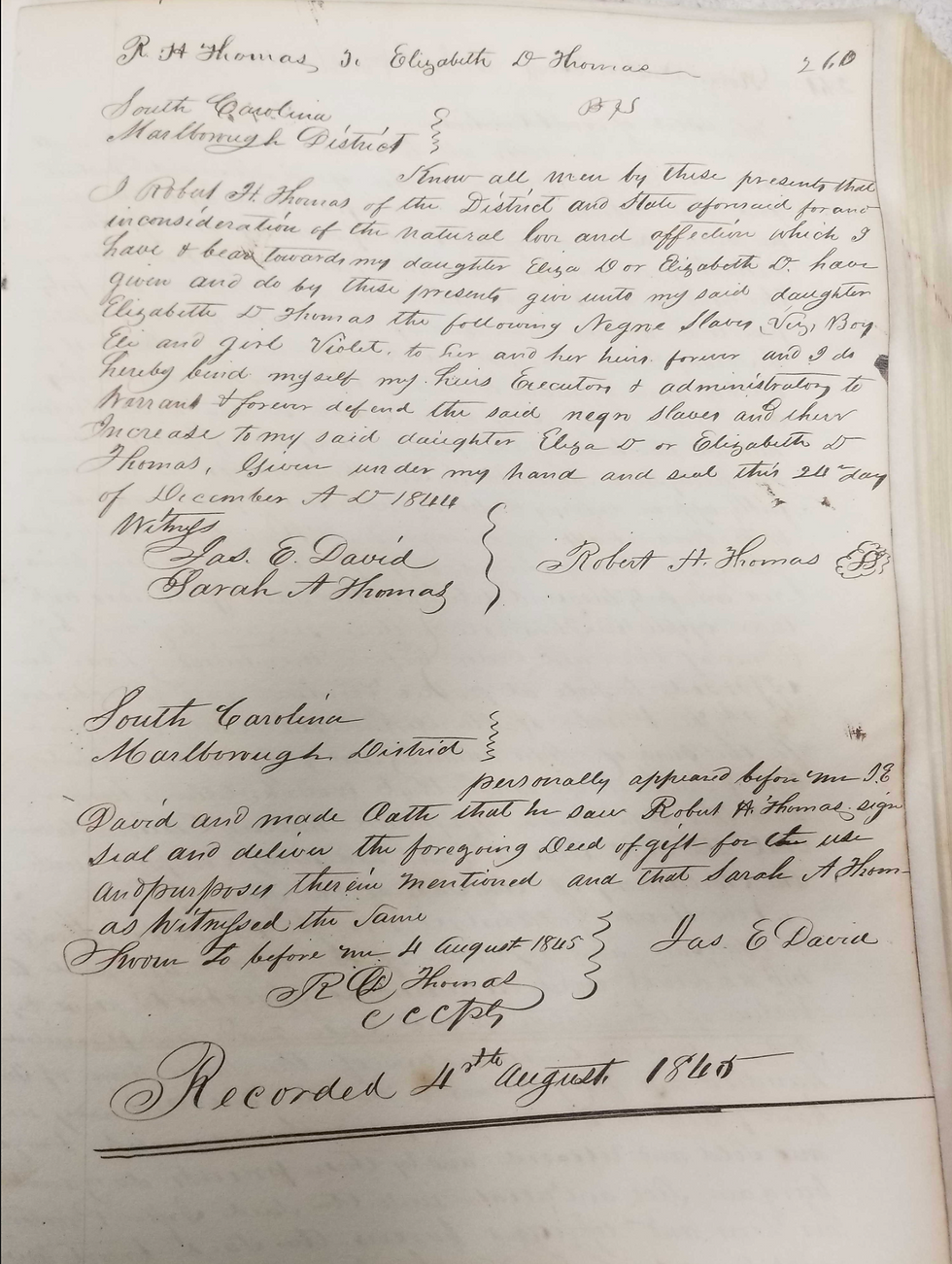
George's daughter Catherine, who also lived in Quebec, was with him in Woburn when he died. Shortly afterward, she returned to Canada and employed an attorney in Boston to handle her father's estate.
Note: The Justice of the Peace who signed the agreement was our distant cousin Clement H. Fay (7C7X) who desceded from our Brigham family.



Comments