
Revolutionary Stories VII
- westmohney

- Apr 19, 2024
- 12 min read
Updated: Dec 14, 2024
There was no band playing for Ichabod Richardson when he returned home to the village of Woburn, Mass., after the American Revolution ~ Charleston Sunday Gazette-Mail
a war triangle
From a story printed in the Charleston, West Virginia Sunday Gazette-Mail on June 20, 1976:
There was no band playing for Ichabod Richardson when he returned home to the village of Woburn, Mass., after the American Revolution. If his old neighbors had recognized him as he walked along the narrow, snow-packed streets that February morning in the year 1783, his shoulders hunched against the cold, they would have thought they were seeing a ghost. It had been seven years since Ichabod had bade farewell to his wife and small son, and he had long been considered dead.
The Ichabod Richardson (4C7X) in that story was a cousin of ours. His wife, Sarah Wyman (2C6X), was also our cousin. And, as it turns out, the man who married Sarah in Ichabod's absence was related to us as well.
Ichabod Richardson was born in Woburn. As a young man, he took up the trade of carpentry. In 1770, when he was twenty-three, Ichabod married fellow Woburnite, Sarah Wyman. A year later, their son Ichabod, Jr. (3C5X) was born. Also living in Woburn was our cousin Josiah Richardson (3C7X). Josiah, a blacksmith, was Ichabod's 4th cousin. In 1769, Josiah married a woman named Mary and together they had three children. Because Ichabod and Josiah were related and living in the same town, it's a sure bet that they were well known to one another.
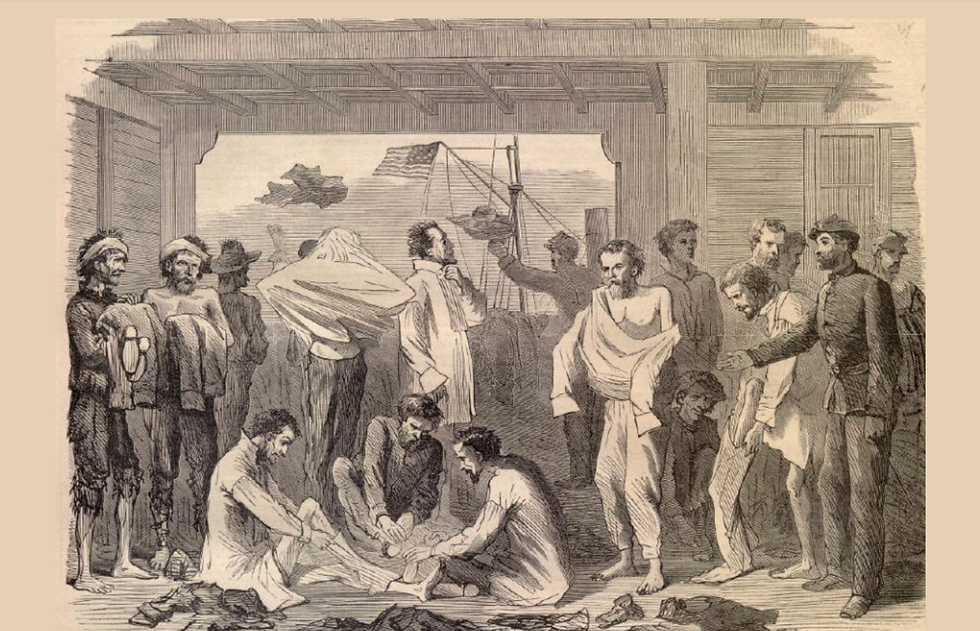
On April 19, 1775, Ichabod marched out with our cousin Loammi Baldwin's (3C7X) regiment to Concord and took part in the battles that happened during the British retreat to Boston. Shortly afterward, he enlisted in the provincial army and served in Cambridge for eight months. He then had the grave misfortune to sign onto the American privateer Warren. In November of 1776, the Warren, with Ichabod aboard, was captured by the Royal Navy.
A list of American prisoners at Forton Prison in England was published in 1879 in the New England Historical and Genealogical Register . The list included “Icho’d Richardson” as one of five men captured while serving under “John Hammon / P. Master.” The five men were “[c]ommitted to Prison the 26th of June, 1777.” Another document on Americans held in Forton Prison indicates that, at some point, Ichabod Richardson escaped. He, along with his Captain, John Hammon, are listed as "Run." The men must have been recaptured, however, because later sources say Ichabod was “pressed into the British service.”
Meanwhile, back in Woburn, two lonely supposed widowers were looking to each other for comfort and companionship. By late 1781, Josiah Richardson's wife had recently died and Sarah Wyman Richardson had been raising her son alone for six long years. Enough time had passed that the couple, as well as the entire town of Woburn, felt reasonably sure that Ichabod was not coming back. Josiah and Sarah were married in Woburn on 19 Mar 1782.
As it turned out, Ichabod was still very much alive. I can find no records for his release from British service but, when the war ended, the former prisoner made his way back to America. When Icabod arrived in Woburn he must have been somewhat shocked to find his wife newly married to his cousin.
The situation, which could have turned out badly, was settled legally and amicably. A document, signed by both men in February of 1783, laid out the terms agreed to: Whereas Ichabod Richardson of Woburn in the County of Middlesex, Commonwealth of Massachusetts shop joiner [i.e., cabinetmaker], about six or seven years since, (during the unhappy Difference between Great Brittian and America), the Colonies Inlisted him on board one of the American Privateers, leaving behind his wife Sarah, by which, he had Issue, one son, in which unlucky voyage he was taken Prisoner by the Brittians and was carried to Great Brittian and from thence to the East Indies, which occasioned him six or seven years absence; without any the least notice to his said wife Sarah, of his being in the land of the living.
But so it happens at this present time, the said Ichabod is now returned and puts in his claim to his said wife Sarah, which by reason of their said son she preferres to live with in the future . . . and they the said Ichabod and Josiah, for the amicable settlement of the unhappy affair between them, stipulate as follows, namely the said Ichabod on his part, on the penalty of one hundred pounds, lawful money, stipulates with the said Josiah, his heirs and executors to pay discharge, and Indemnify him and them from all demands of what nature so ever against the said Sarah, at and until the time of her intermarriage with the said Josiah, and from all for the future, and that he the said Josiah shall Retain all the goods by him, the said Josiah and the said Sarah, Procured since the time of their intermarriage, during life.
And he the said Josiah, on his part stipulates with the said Ichabod, his heirs and executors, on the penalty of one hundred pounds like money, to discharge the said Sarah from the obligations of such marriage, and to Restore all the goods she brought with her at that time.
In confirmation of all above written, they have hereunto interchangably set their hands and seals, this fifteenth day of February, one thousand seven hundred eighty three. So Sarah chose Icabod for the sake of her son and Josiah agreed to walk quietly away. I wish I could say that they lived happily ever after but Sarah died just four years later in 1886. She was only thirty four years old and her son Ichabod fifteen at the time of her death. Ichabod died six years later at the age of forty-four. Josiah died in 1801 at fifty four years. I can find no record of Josiah marrying again after his sad affair with Sarah.
Ichabod Jr., married our cousin Ruth Baldwin (4C6X). Ruth's uncle was the famed military man and engineer, Loammi Baldwin, featured in many of our prior posts.
paymaster Benjamin Heywood
Cousin Benjamin Heywood (3C6X) was born in 1746 in Shrewsbury, MA. He apprenticed as a housewright and worked as a carpenter until his enrollment at Harvard in 1771. While at Harvard he joined the Marti-Mercurian Band. This was a campus "association for exercise and recreation which marched and maneuvered with fife and drum." It was so named because of its motto “tam marti quam mercurio,” which translates to "as much for Mars as for Mercury."
Benjamin's war record shows his first service in New York with General Washington in 1776. He quickly rose to the rank of captain and then was appointed paymaster of the 6th Massachusetts Regiment. His duties were just as you would expect. He received wages from the Paymaster General and dispersed the money to the men in his regiment. Benjamin held this position from 1776 until the end of the war in 1783.
After the war, Benjamin returned home to Shrewsbury, married and began a family but kept his hand in public affairs. His paymaster duties must have come in handy when he was appointed to a committee, along with General Henry Knox (for whom Fort Knox was named) and Colonel John Brooks, to "recommend measures to appease disgruntled soldiers whose pay had been postponed." The appeasement of former soldiers would continue to be a sticky wicket until 1786 when some of the Revolutionary War veterans staged a revolt known as Shay's Rebellion. We'll have more on that in a future post.
Cousin Benjamin continued with his civic duties as a highly respected member of his community. William Lincoln in his The History of Worcester wrote that Benjamin's “activity of disposition and facility in business enabled him, in addition to the management of a farm, to devote much time to the concerns of his neighbors and to public affairs. The reliance on his integrity and good judgment was testified by frequent selection as arbitrator, executor, and guardian.”
Benjamin was appointed a judge of the Court of Common Pleas, an acting magistrate of the county, a member of the Board of Trustees of Leicester Academy, an elector of the President and Vice President of the United States twice, a trustee of the Hassanamisset Indians, and an officer in many charitable and religious associations.
In 1796, true to his commitment to the Natives, Benjamin, along with a colleague, submitted a petition to the Massachusetts General Court in an effort to ensure that land belonging to deceased Native American Fortune Burnee would remain in the hands of the Hassanamisset tribe.
Benjamin died in 1816 at age 70.
fallen on hard times
After the war, times were hard for many of the veterans who had served in the army. Shay's Rebellion, which will be covered in a future post, was a revolt by former soldiers who felt they had gotten a raw deal by the American government. Our cousin Noah Moulton Littlefield (3C9X), was a case in point.
Noah was born in Wells, Maine in 1738. He was captain of a company of Minutemen and served his country defending the seacoast. He was eventually promoted to full colonel and saw action at Ticonderoga, Saratoga, Valley Forge, the Battle of Monmouth and West Point. His name appears on a memorial plaque honoring the officers that served with George Washington at Valley Forge.

Note: The name directly below Noah's on the Valley Forge monument is another cousin of ours, Captain Moses Greenleaf (5C6X).
Sometime after the war, Noah became a supernumerary officer which means, in essence, he was forced to retire. From his signature on the 1794 form below, it appears that Noah had achieved the rank of brigadier general.


In spite of his rank and extensive military career, Cousin Noah came into hard times in his old age. in 1818, at age 80, he appealed to the General Court for assistance:
Original Certificate April 8, 1818. Certif No. 5897. Reason. - the infirmaties of old age and being afflicted with a rupture. No family but myself. Estate - No real or personal estate whatever and have not had for 20 years last past, And I reside with my son, who is in such indigent circumstances at to be unable to give me any support. Sworn to July 4, 1820 Signed Noah M. Littlefield. No value.
I'm not sure what no value means but it possibly means that poor Noah received nothing.
Cousin Joseph Richardson, a true patriot
Joseph Richardson (3C7X) was the son of our Loyalist cousin Philip Richardson (2C8X). We wrote about Philip in our "Revolutionary Stories III" post. Unlike his father, Cousin Joseph was a staunch Patriot who served his country well in the Continental Army during the war. When Joseph was quite young, his mother died. Shortly after her death, his father married Esther Webster who Joseph remained loyal to in later years.
In the spring of 1775, not long after the battles at Lexington and Concord, Joseph enlisted in the newly formed American army. His Loyalist father and stepmother, meanwhile, had thrown their lot in with the British and remained with them in Boston during the siege. When the British army left Boston for New York a year later, Philip and Esther sailed north with them, finally making their home in Halifax, Nova Scotia.
Son Joseph, on the other hand, had quite an impressive military record with the American army. He served almost continually from 1775 until January of 1780. Below is an application Joseph submitted in 1820 asking that the amount of his pension, which he felt to be inadequate, be raised. In the application he details his extraordinary army career during the Revolutionary War:
To the Justices of the Court of Common Pleas.
And the said Joseph doth here depose an oath, that he served in the Revolutionary War as follows, viz.:
In the Spring of 1775, i enlisted in Capt. Benjamin Titcomb's company. . .for the term of eight months, during which I was present at an affair with the enemy on Charlestown Neck (the day after Bunker Hill). Immediately after the expiration of the term, I re-enlisted in the same company and regiment, for the term of twelve months, during which I was present in the retreat of the American army from Canada (Benedict Arnold's failed attempt to take Quebec) and was severely wounded in the arm by a party of Indians. . . I was present at the capture of the Hessians at Trenton, in December 1776 (Washington crossing the Deleware). I was likewise present at the affair at Princeton, about the same time, in which my cartridge-box containing my pittance of savings, was shot from my side, and destroyed by a cannon ball. I afterwards enlisted in the same company. . . for the term of three years; was present at the retreat from Ticonderoga in 1777, and was in the engagement at Hubbardton (where our cousin Josiah Fletcher (4C7X) was taken captive) where I was wounded in the shoulder. I afterwards assisted at the capture of Burgoyne in the autumn of the same year, and then marched into winter quarters at Valley Forge. In the year 1778, I was at Monmouth, and spent the season with the main army at the White Plains. I marched with Major General Sullivan into the Indian counrty, and was present at the engagement with the Indians at Newtown. After the return of the army, I was, in the month of January, 1780, at Danbury, in Connecticut, honorably discharged, my term of service having expired; having spent nearly five years ( it was actually five years and eight months) of the flower of my life, and having lost the service of my limbs in the cause of my country. Nor was it until the year 1809, that my duty to my family required me to apply for some remuneration for these sacrifices, when the pitiful allowance of two dollars and fifty cents upon the pension-list was made me, which was regarded, not as a favor, but an inadequate compensation for a debt, earned with the greatesest exertion and suffering. . . Sworn and declared before the said court the sixth day of July, 1820. Joseph Richardson.
It appears that the wheels of the War Departement, like the wheels of justice, grind exceedingly slow. Unbeknowst to Joseph, the War Department had already decided, but not acted on, their decision to up his claim a year prior.
War Department. Revolutionary Claim.
I certify that in conformity with the Law of the Untied Sates of the 8th of March, 1818, Joseph Richardson, of the county of Strafford, State of New Hampshire, late a private in the Army of the Revolution, is inscribed on the Pension-List, Roll of the New Hampshire Agency, at the Rate of Eight dollars per month, to commence on the second day of April, 1818. Given at the War Office of the United States, this 19th day of April, 1819. J.C. Calhoun, Secretary of War.
After leaving the army in 1780, Joseph had settled in Dover, New Hampshire where he married Sarah Hanson. Sometime before 1797, he moved with his family to Durham, NH. His war injuries had left him unable to do much physical labor, so Joseph became an inn holder. The Richardson Tavern was "sited on a rise, providing views of Mill Pond in the distance." The tavern was “modernized” in the early 20th century and eventually converted into apartments. Below is a photo of the house as it looks today.

Over the years, Joseph had not forgotten his step-mother Esther who was living alone in Nova Scotia after the death of her husband, Philip. According to the Richardson Memorial written by John Adams Vinton, "[u]nderstanding that his step-mother, who from love to the royal cause, had deserted him in March, 1776. . . was in destitute circumstances, he had her brought to his home, and carefully nourished her during the remainder of her life."
Esther died in 1810 at age 85. Patriot extraordinaire Joseph Richardson died in Durham in 1824 at age 68.
another Sheriff Greenleaf
In a few prior posts, we wrote about our cousins Stephen (3C7X) and William Greenleaf (3C7X) who were back to back sheriffs in Boston before and during the revolution years. It turns out that their nephew, also William Greenleaf (4C6X), followed in his uncles' footsteps when he became sheriff of Worcester County.
After the surrender of Cornwallis William led the celebration march in his hometown of Lancaster. From an article in a Lancaster newspaper:
Lancaster, Nov. 19, 1781. — On Thursday morning last, a considerable number of the most respectable inhabitants of this place assembled at the Sun Tavern to celebrate the capture of Cornwallis, when, after mutual congratulations on this happy event, the company, conducted by William Greenleaf Esq., formed and marched in procession through the principal streets of the town, preceded by an advance guard, fieldpiece, and band of music, with American colors displayed. Having fired sundry salutes, followed with three huzzas, the company returned to the 'Sun,' where an elegant dinner was provided for them and such gentlemen from the neighboring towns as were pleased to favor them with their company. After dinner the following toasts were drank, each being followed by a discharge of a fieldpiece with three cheers.
Another article, this time Boston's Massachusetts Spy, reported William's action during the outbreak of violence known as Shay's Rebellion:
During the exciting times of the Shay Insurrection Col. William Greenleaf sheriff of the county. On Wednesday, the 22d of November, 1786, he had, from the courthouse steps in Worcester, read the riot act and harangued the crowd, an armed mob, there congregated to prevent the sitting of the Court of General Sessions. One of the orators of the insurgents, in reply, took the occasion to state that among many grievances which they found too oppressive for human endurance, and from which they were resolved to have speedy relief, were the sheriff himself and his exhorbitant fees. Colonel Greenleaf coolly rejoined : "If you deem my fees for execution oppressive, gentlemen, you need not wait longer for redress; I will hang you all for nothing, with the greatest pleasure."
Caesar and Cato Wyman
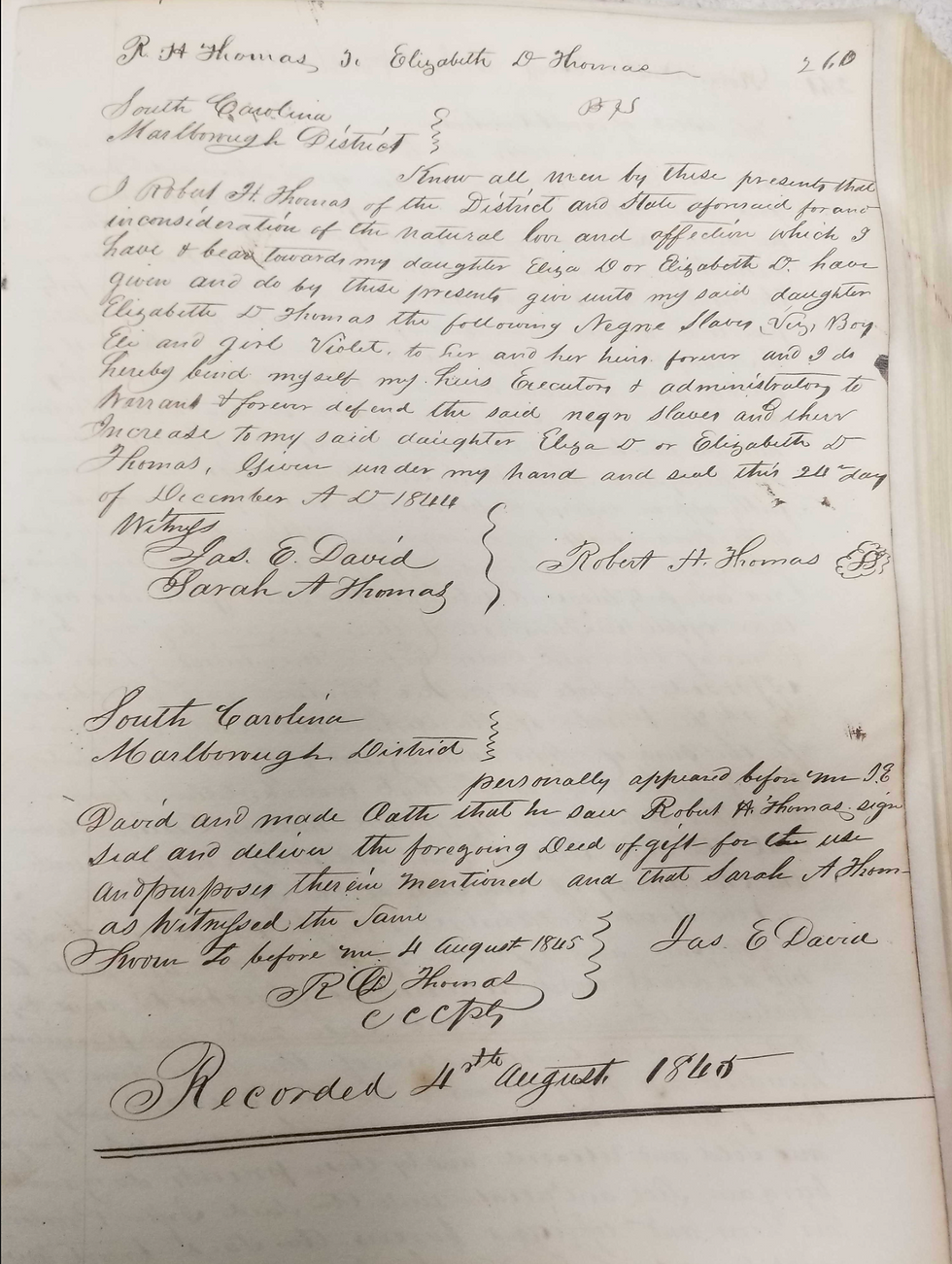
In the multi-volume Massachusetts Soldiers and Sailors in the Revolutionary War, I found records for two Black men with the last name of Wyman. This means that, at some point in time, the two men were either slaves in a Wyman household or descended from slaves in a Wyman household.
From the records, we find that "Wyman Caesar, Black man" was part of the Continental Army. Possibly wounded, at some point Caesar was "transferred to invalids."
Cato Wyman was from Woburn. The records describes him as "29, 5'3" complexion black, hair black eyes black laborer..." He was listed as a "former servant of (our cousin) Deacon Zebediah Wyman (2C8X)." Cato, like Caesar, was enlisted in the Continental Army. He was part of a "return of recruits. . .who were reported as unfit for duty. . .reported an idiot, subject to fits." Fits or no fits, Cato lived for another 30 years after the war ended. He died in 1810 at age 61.


Comments